A routine that fits the design
An individual crown, a fixed bridge and a removable denture create different cleaning spaces. A practical routine should match the restoration instead of relying on one tool for every design.


Explore your care
Everyday care, tooth repair and support for your gums.
Explore your care
Explore the possibilities for your smile.
Explore your care
Options for replacing one tooth, several teeth or a full arch.
Explore your care
Explore tooth extractions and wisdom teeth removal.
Explore your care
Explore treatment options for the inside of your tooth.
Explore your care
Two ways to explore a straighter smile.
Atlas Dental
Atlas Dental
Dental Implants / Treatment guide
Implants need ongoing care even though their artificial parts cannot develop tooth decay. Daily cleaning and professional review focus on the surrounding gums and bone, as well as the fit, bite and condition of the replacement teeth.
Explore your options with our Atlas Dental team. Ask who would provide your treatment and whether a specialist referral is needed.
Let’s talk about your options See what care can involve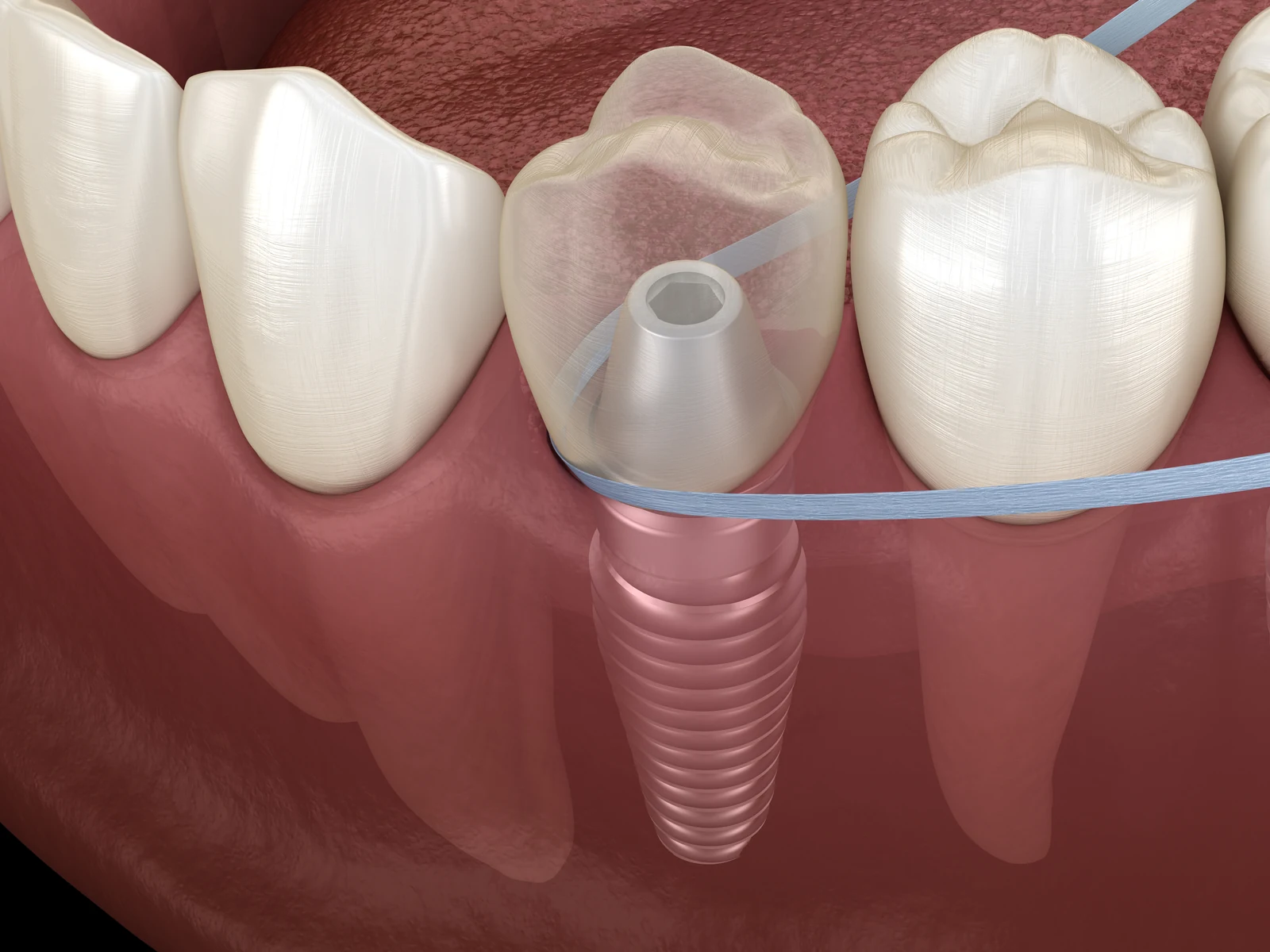
Floss passes around an implant-supported crown to clean the area beside the gum.
This is one cleaning example. Your dental team can show which tools suit your crown, bridge or denture and how to use them.
Understanding your care
Start with the purpose of treatment, then explore what matters for your own care.
An individual crown, a fixed bridge and a removable denture create different cleaning spaces. A practical routine should match the restoration instead of relying on one tool for every design.
Inflammation can affect the tissues around an implant. Changes in comfort, bleeding, movement or the way the teeth meet are reasons for assessment rather than waiting for the next routine visit.
Replacement teeth and attachment components can wear, chip or loosen. Reviewing the bite and hardware complements tissue monitoring and helps identify when servicing or a repair is needed.
From questions to a plan
The details and sequence depend on your assessment and individual treatment plan.
The clinician assesses the restoration, surrounding tissues and relevant risk factors. Baseline records help future visits identify changes in the implant and its support.
Cleaning methods are demonstrated for the actual spaces around your restoration. The approach can be adjusted when access, dexterity or appliance design creates difficulties.
Professional maintenance includes appropriate cleaning and assessment of the gum tissues. Visit frequency is individualized to disease history, findings and the type of restoration.
Inflammation or component problems may require targeted treatment beyond routine maintenance. A follow-up plan is chosen according to the cause and extent of the problem.
Before you decide
Maintenance reduces avoidable problems but cannot guarantee an implant will last indefinitely. A history of gum disease, smoking, poorly controlled diabetes and difficulty cleaning may increase risk. Established peri-implant disease can need additional treatment, sometimes including surgery. A loose or painful implant requires prompt assessment. The recommended review interval should be individualized rather than assumed to be the same for everyone.
Bacteria can still collect around its components and cause inflammation in nearby tissues. Bone support can be affected by peri-implant disease, even though the artificial tooth itself does not form a cavity.
Not necessarily. A single crown, connected bridge and removable denture have different access points. The clinician should show a routine that fits your restoration and is realistic for you to maintain.
No. Maintenance aims to monitor health and manage deposits. If inflammation or bone loss is present, diagnosis and additional treatment may be needed rather than simply repeating a routine cleaning.

A place to begin
Talk through your priorities, alternatives and who would provide your care. An assessment helps clarify the next step.
Let’s talk about your optionsOur team will contact you to confirm your visit.
The treatment images and animations in this guide illustrate examples of care. They are not Atlas Dental patient results, personal treatment recommendations or statements about an individual clinician’s scope. Your assessment and care plan determine which options are appropriate for you.