Excess or uneven tissue
A particular gumline can change how long teeth appear. First, the assessment distinguishes excess tissue from inflammation, tooth position, lip movement or other contributors to the appearance.


Explore your care
Everyday care, tooth repair and support for your gums.
Explore your care
Explore the possibilities for your smile.
Explore your care
Options for replacing one tooth, several teeth or a full arch.
Explore your care
Explore tooth extractions and wisdom teeth removal.
Explore your care
Explore treatment options for the inside of your tooth.
Explore your care
Two ways to explore a straighter smile.
Atlas Dental
Atlas Dental
Cosmetic Dentistry / Treatment guide
Gum contouring changes the outline of gum tissue around selected teeth. It may be considered when excess tissue affects tooth proportions, after the cause of the gum appearance and the underlying bone levels are assessed.
Explore your options with our Atlas Dental team. Ask who would provide your treatment and whether a specialist referral is needed.
Let’s talk about your options See what care can involve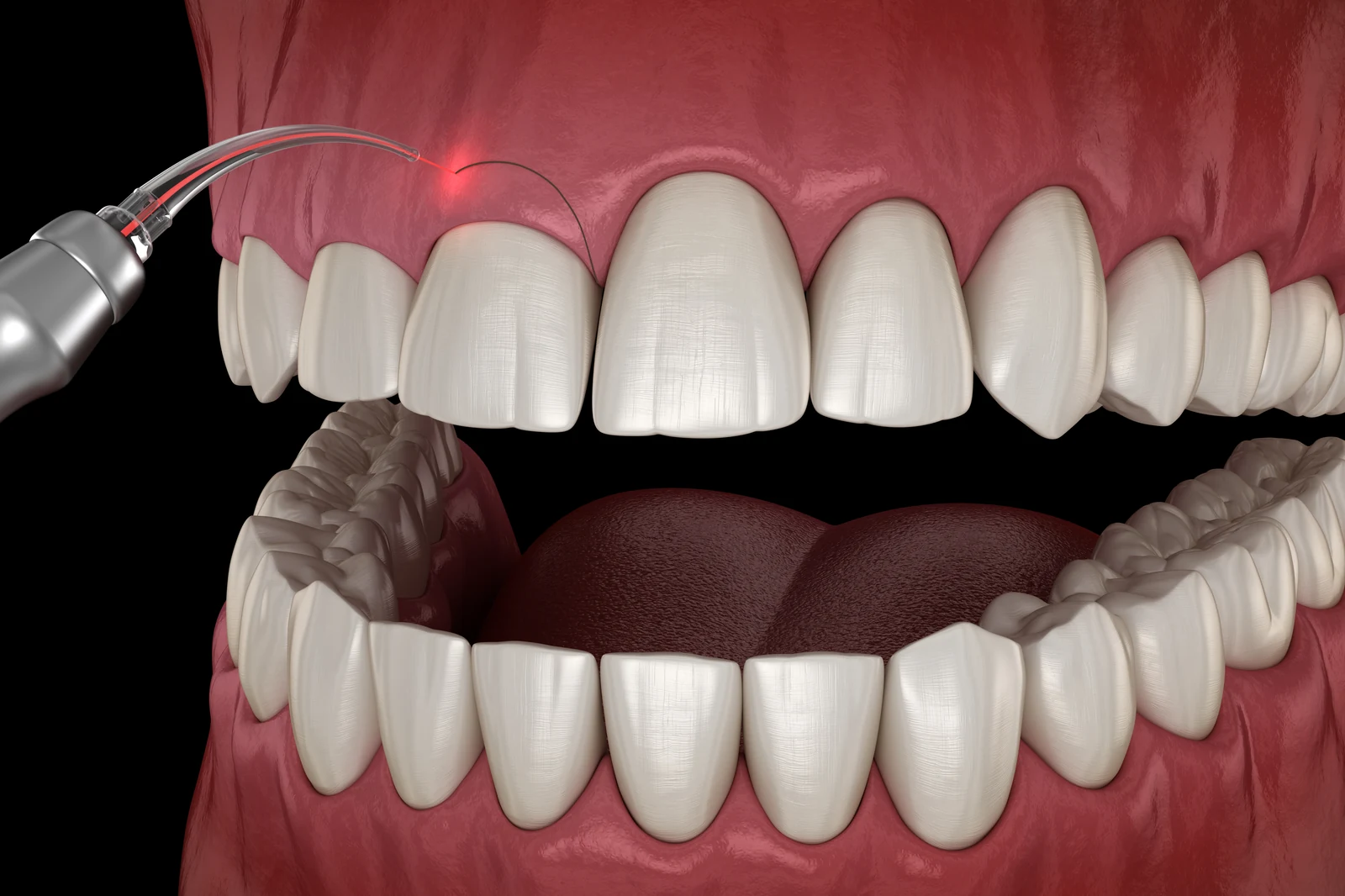
A laser reshapes selected gum tissue to change the visible outline around the teeth.
Laser treatment is one technique. Bone levels and the cause of excess gum coverage determine whether gum contouring alone is suitable.
Understanding your care
Start with the purpose of treatment, then explore what matters for your own care.
A particular gumline can change how long teeth appear. First, the assessment distinguishes excess tissue from inflammation, tooth position, lip movement or other contributors to the appearance.
Healthy gums and an understanding of underlying bone are essential to planning. Removing visible tissue alone may be unsuitable if it would disrupt the tissues supporting the tooth.
Some cases involve only soft tissue; others require crown lengthening or another approach. The proposed treatment should explain the actual anatomy, rather than promise a simple cosmetic trim.
From questions to a plan
The details and sequence depend on your assessment and individual treatment plan.
Discuss the concern and examine gums, teeth, bite and smile. Review whether swelling or another treatable condition is affecting the visible gumline.
Assess the relationship of gum and underlying bone. Discuss the intended contour and whether additional periodontal treatment or specialist assessment is needed.
Carry out the agreed approach with an appropriate comfort plan. The method and extent depend on the diagnosis, rather than a preferred instrument alone.
Assess tissue healing before judging the longer-term appearance. Discuss whether further care is appropriate and how the revised gumline relates to any planned restorations.
Before you decide
Not every prominent or uneven gumline is best treated by removing tissue. Bone position, lip movement and tooth alignment can change the options. Gum reshaping can cause discomfort, bleeding, infection, sensitivity or an unwanted contour, and tissue may regrow. The plan should explain whether the procedure is limited to gum tissue or involves crown lengthening and bone adjustment.
It does not add tooth structure. It can reveal more of a tooth that is covered by gum, changing its visible proportions. Whether that is suitable depends on the anatomy.
The terms can overlap. Cosmetic contouring often describes changing the visible gum outline; crown lengthening may adjust gum and bone to expose tooth structure for restorative or aesthetic purposes.
No. Different instruments can be used to reshape tissue. The diagnosis, planned tissue change and clinician’s approach matter more than assuming one instrument is appropriate for every case.

A place to begin
Talk through your priorities, alternatives and who would provide your care. An assessment helps clarify the next step.
Let’s talk about your optionsOur team will contact you to confirm your visit.
The treatment images and animations in this guide illustrate examples of care. They are not Atlas Dental patient results, personal treatment recommendations or statements about an individual clinician’s scope. Your assessment and care plan determine which options are appropriate for you.