Replace a whole arch
When all teeth in an arch are missing, a full denture can restore a row of replacement teeth. Its design depends on the shape of the tissues beneath it.


Explore your care
Everyday care, tooth repair and support for your gums.
Explore your care
Explore the possibilities for your smile.
Explore your care
Options for replacing one tooth, several teeth or a full arch.
Explore your care
Explore tooth extractions and wisdom teeth removal.
Explore your care
Explore treatment options for the inside of your tooth.
Explore your care
Two ways to explore a straighter smile.
Atlas Dental
Atlas Dental
General Dentistry / Treatment guide
Dentures are removable replacements for missing teeth. A full denture replaces all teeth in an arch; a partial denture replaces selected spaces while some natural teeth remain. Each is designed around the support and fit available.
Explore your options with our Atlas Dental team. Ask who would provide your treatment and whether a specialist referral is needed.
Let’s talk about your options See what care can involve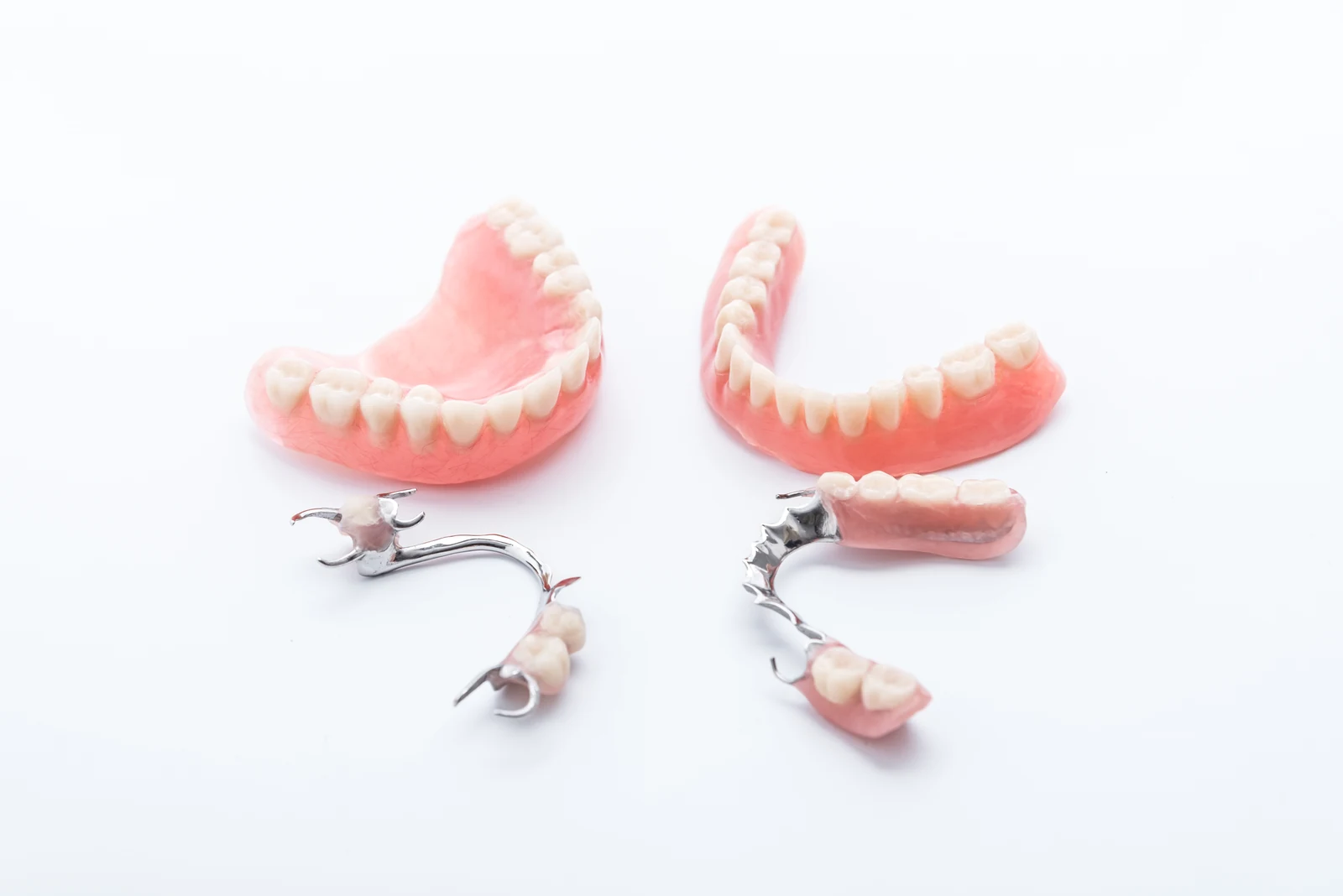
A full denture replaces all teeth in an arch. A partial denture fits around the natural teeth that remain.
These are examples of removable dentures. Materials, framework and retention are chosen for the teeth and tissues available.
The animation could not be played. Open the treatment video.
A removable partial denture fits around the remaining natural teeth to replace selected missing teeth.
This example shows one lower partial-denture design. It is removable and does not show an implant-retained denture.
Understanding your care
Start with the purpose of treatment, then explore what matters for your own care.
When all teeth in an arch are missing, a full denture can restore a row of replacement teeth. Its design depends on the shape of the tissues beneath it.
A partial denture works alongside remaining natural teeth. The location of the gaps and the condition of those teeth affect the base, framework, and retention design.
Fit and comfort may change as the mouth adapts or the supporting tissues change. Review and adjustment are part of maintaining a denture rather than a sign of a finished, permanent fit.
From questions to a plan
The details and sequence depend on your assessment and individual treatment plan.
The dentist examines the mouth and discusses fixed and removable options. Any remaining teeth, gum health, and available support help define the denture plan.
Impressions or scans and bite records help plan how the denture will sit and how the upper and lower teeth will meet during function.
A trial stage may be used to assess the tooth arrangement, bite, and appearance. The exact sequence depends on the type of denture being made.
The completed appliance is checked in the mouth. Your team explains use and cleaning, with follow-up to assess pressure areas, function, and changes in fit.
Before you decide
Dentures can require an adjustment period and may feel different during speech and chewing. Soreness, movement, and changes in fit can occur, particularly as tissues change. Remaining teeth and gums still need care. Fixed bridges or implant-assisted options may be worth discussing, depending on your health, anatomy, preferences, and the support available.
A full denture replaces every tooth in one arch. A partial denture replaces some teeth while working around others that remain, often using a framework or other retention features.
No. Conventional dentures use support from oral tissues and, for some partial designs, remaining teeth. Implant-retained dentures are another category with attachments to implants placed in the jaw.
Yes. Dentures need assessment for fit and wear, and the mouth still needs examination. When natural teeth remain, their health and the supporting gums also need ongoing review.

A place to begin
Talk through your priorities, alternatives and who would provide your care. An assessment helps clarify the next step.
Let’s talk about your optionsOur team will contact you to confirm your visit.
The treatment images and animations in this guide illustrate examples of care. They are not Atlas Dental patient results, personal treatment recommendations or statements about an individual clinician’s scope. Your assessment and care plan determine which options are appropriate for you.