A careful visual check
The clinician looks for changes in color, surface texture, or shape. A finding can have many possible causes, so its appearance alone does not establish a diagnosis.


Explore your care
Everyday care, tooth repair and support for your gums.
Explore your care
Explore the possibilities for your smile.
Explore your care
Options for replacing one tooth, several teeth or a full arch.
Explore your care
Explore tooth extractions and wisdom teeth removal.
Explore your care
Explore treatment options for the inside of your tooth.
Explore your care
Two ways to explore a straighter smile.
Atlas Dental
Atlas Dental
General Dentistry / Treatment guide
An oral cancer screening is an examination for unusual changes in the mouth and nearby tissues. It involves looking and feeling, discussing symptoms, and deciding whether an area needs review or further investigation.
Explore your options with our Atlas Dental team. Ask who would provide your treatment and whether a specialist referral is needed.
Let’s talk about your options See what care can involve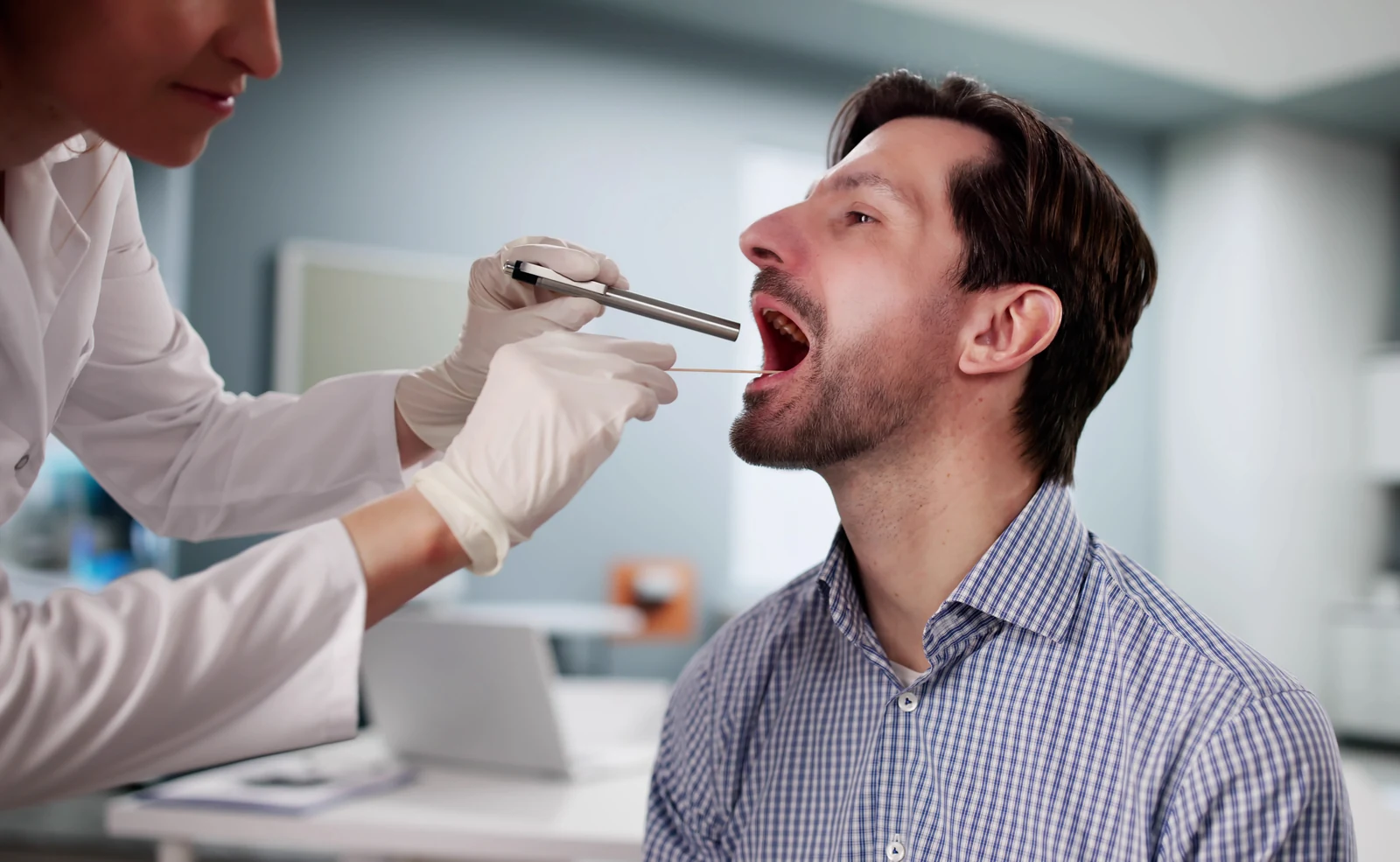
Example: an examination inside the mouth. An oral cancer screening also checks the lips, tongue, surrounding tissues, jaw and neck.
This photograph shows a general oral examination. Screening looks for changes; a finding may need further investigation to identify its cause.
Understanding your care
Start with the purpose of treatment, then explore what matters for your own care.
The clinician looks for changes in color, surface texture, or shape. A finding can have many possible causes, so its appearance alone does not establish a diagnosis.
A sore, lump, persistent patch, or difficulty swallowing is useful information even if it is not painful. Tell the team how long a change has been present.
An unusual area may need monitoring, a further examination, or referral. A biopsy may be needed to determine what a particular tissue change actually represents.
From questions to a plan
The details and sequence depend on your assessment and individual treatment plan.
Describe any sores, patches, lumps, numbness, or swallowing changes, including how long they have lasted. Your relevant health and exposure history also informs the assessment.
The clinician checks the lips, lining, tongue, floor of the mouth, and other visible tissues. You may be asked to move your tongue for access.
The assessment can include feeling around the jaw and neck. These findings are considered with the examination inside your mouth and the symptoms you describe.
If an area needs attention, the next step is explained. This may involve review or referral for a more specific examination or tissue sample.
Before you decide
Screening is an assessment, not a diagnosis or a guarantee that cancer is absent. Many mouth changes are benign, while some require prompt investigation. A persistent change should be evaluated even after a recent dental visit. NIDCR recommends seeing a dentist or doctor for concerning symptoms that last more than two weeks.
No. Irritation and other conditions can also change the appearance of oral tissues. The examination helps determine whether monitoring, additional testing, or referral is the appropriate next step.
A screening can identify an area that needs attention, but it cannot confirm cancer by itself. A specialist assessment and often a tissue sample are needed for diagnosis.
A persistent sore, lump, patch, or other unexplained change deserves assessment. If symptoms last more than two weeks, arrange an evaluation with a dentist or doctor.

A place to begin
Talk through your priorities, alternatives and who would provide your care. An assessment helps clarify the next step.
Let’s talk about your optionsOur team will contact you to confirm your visit.
The treatment images and animations in this guide illustrate examples of care. They are not Atlas Dental patient results, personal treatment recommendations or statements about an individual clinician’s scope. Your assessment and care plan determine which options are appropriate for you.