Start with the causes
The assessment looks beyond individual damaged teeth to the factors contributing to the problem. Controlling active disease and understanding wear are part of planning durable restorative care.


Explore your care
Everyday care, tooth repair and support for your gums.
Explore your care
Explore the possibilities for your smile.
Explore your care
Options for replacing one tooth, several teeth or a full arch.
Explore your care
Explore tooth extractions and wisdom teeth removal.
Explore your care
Explore treatment options for the inside of your tooth.
Explore your care
Two ways to explore a straighter smile.
Atlas Dental
Atlas Dental
General Dentistry / Treatment guide
Full-mouth rehabilitation brings several treatment decisions into one coordinated plan. It may address widespread damage, wear, missing teeth, or changes in how the bite functions. The combination and sequence depend on a detailed assessment.
Explore your options with our Atlas Dental team. Ask who would provide your treatment and whether a specialist referral is needed.
Let’s talk about your options See what care can involve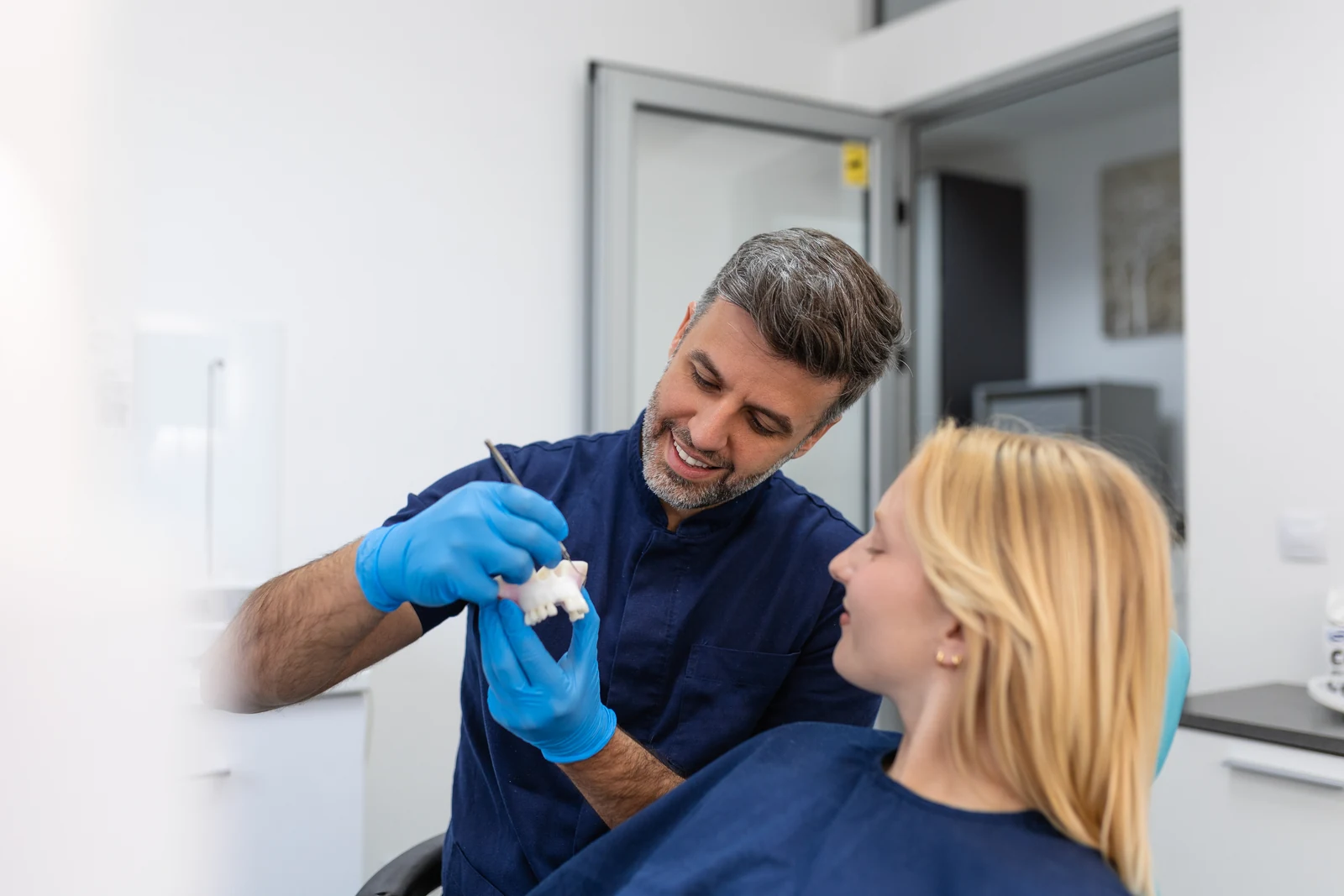
A dental model helps the dentist discuss how the teeth and bite can be considered together in a coordinated treatment plan.
This consultation illustrates planning. Full-mouth rehabilitation may combine different treatments and stages according to the findings.
Understanding your care
Start with the purpose of treatment, then explore what matters for your own care.
The assessment looks beyond individual damaged teeth to the factors contributing to the problem. Controlling active disease and understanding wear are part of planning durable restorative care.
A plan might combine restorations, replacement teeth, gum care, or orthodontic treatment. It does not mean every tooth automatically receives the same procedure or material.
The order of care depends on clinical priorities, healing, testing of proposed changes, and your preferences. Complex needs may involve coordination with one or more specialists.
From questions to a plan
The details and sequence depend on your assessment and individual treatment plan.
Records of the teeth, supporting tissues, and bite are reviewed together with your concerns. The aim is to understand both the problems and the options available.
Active disease and urgent concerns are addressed as appropriate before extensive restorative work. This stage helps clarify which teeth and tissues can support the longer-term plan.
The proposed arrangement and bite may be explored with models, digital planning, or provisional restorations. These tools help guide discussion without guaranteeing the final result.
Treatment proceeds in an agreed sequence with reassessment along the way. Ongoing care remains necessary for natural teeth, restorations, replacement teeth, and supporting tissues.
Before you decide
This term describes a coordinated approach, not one standard procedure. It can involve irreversible treatment, multiple stages, and different risks for each component. More limited treatment may be reasonable in some situations. The plan should explain what is essential, what is optional, which specialists may be involved, and how the work will be maintained.
No. Each tooth is assessed on its own merits while considering the whole bite. A plan may include several treatment types and may preserve teeth without full coverage.
There can be overlap, but rehabilitation focuses on broad functional and restorative needs. Appearance matters too, while the health of the teeth, supporting tissues, and bite remains central.
Often the plan is organized into stages, but the sequence is individual. Clinical priorities, healing, temporary restorations, and coordination between providers can affect how the work is arranged.

A place to begin
Talk through your priorities, alternatives and who would provide your care. An assessment helps clarify the next step.
Let’s talk about your optionsOur team will contact you to confirm your visit.
The treatment images and animations in this guide illustrate examples of care. They are not Atlas Dental patient results, personal treatment recommendations or statements about an individual clinician’s scope. Your assessment and care plan determine which options are appropriate for you.