Reach the narrow grooves
The chewing surfaces of molars have recesses that a toothbrush may not clean easily. Sealants are designed to protect these particular areas from the decay process.


Explore your care
Everyday care, tooth repair and support for your gums.
Explore your care
Explore the possibilities for your smile.
Explore your care
Options for replacing one tooth, several teeth or a full arch.
Explore your care
Explore tooth extractions and wisdom teeth removal.
Explore your care
Explore treatment options for the inside of your tooth.
Explore your care
Two ways to explore a straighter smile.
Atlas Dental
Atlas Dental
General Dentistry / Treatment guide
Sealants protect the small grooves on the chewing surfaces of back teeth. A thin coating flows into these areas and hardens, creating a barrier where food and bacteria can otherwise collect.
Explore your options with our Atlas Dental team. Ask who would provide your treatment and whether a specialist referral is needed.
Let’s talk about your options See what care can involve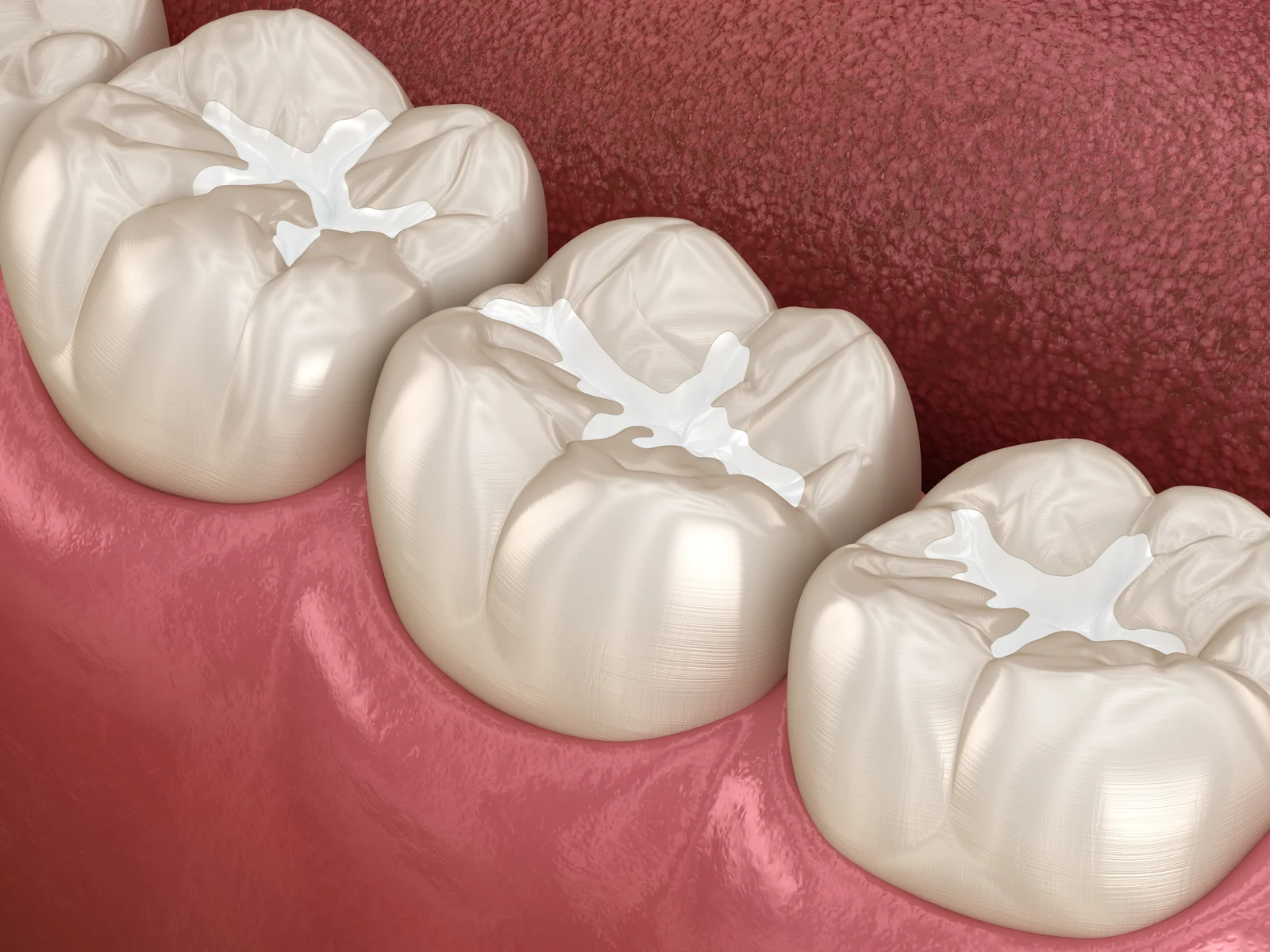
Material covering the chewing grooves illustrates the areas that preventive sealants are designed to protect.
Sealants protect selected surface grooves. A tooth with a cavity needs a separate assessment and may require a filling.
Understanding your care
Start with the purpose of treatment, then explore what matters for your own care.
The chewing surfaces of molars have recesses that a toothbrush may not clean easily. Sealants are designed to protect these particular areas from the decay process.
The tooth needs to be examined before a sealant is recommended. Its condition, eruption, and ability to stay dry during placement all affect the decision.
A sealant protects the area it covers, while fluoride and daily cleaning support other surfaces. The coating should also be reviewed during future dental examinations.
From questions to a plan
The details and sequence depend on your assessment and individual treatment plan.
The dentist assesses the chewing surface and whether a sealant is appropriate. A tooth with a cavity may need a different type of treatment.
The surface is cleaned and prepared for the chosen material. Keeping the area suitably dry helps the sealant attach to the tooth as intended.
The sealant is applied into the grooves and hardened according to the product. The clinician checks the surface and how the teeth meet afterward.
At later visits, the team checks whether the sealant is still intact. Areas that have worn or been lost may need repair or replacement.
Before you decide
Sealants are a preventive option for selected teeth, not a substitute for diagnosing or restoring a cavity. They can wear or become partially lost, so periodic review matters. Suitability depends on the tooth surface and decay risk. Daily cleaning and other preventive measures are still needed for the rest of the mouth.
Children often benefit as permanent molars appear, but adults with suitable tooth surfaces may also be considered. Your dentist evaluates the tooth and its risk rather than using age alone.
No. A sealant generally protects selected pits and grooves on the chewing surface. The sides, areas between teeth, and gumline still need their usual cleaning and prevention.
They can provide protection for years, but their condition needs review. The dentist checks for wear or missing material and can recommend repair when an area is no longer sealed.

A place to begin
Talk through your priorities, alternatives and who would provide your care. An assessment helps clarify the next step.
Let’s talk about your optionsOur team will contact you to confirm your visit.
The treatment images and animations in this guide illustrate examples of care. They are not Atlas Dental patient results, personal treatment recommendations or statements about an individual clinician’s scope. Your assessment and care plan determine which options are appropriate for you.