Chips and edges
A minor chip may be repaired by adding composite where tooth structure is missing. The examination first checks whether the damage extends further than the visible edge.


Explore your care
Everyday care, tooth repair and support for your gums.
Explore your care
Explore the possibilities for your smile.
Explore your care
Options for replacing one tooth, several teeth or a full arch.
Explore your care
Explore tooth extractions and wisdom teeth removal.
Explore your care
Explore treatment options for the inside of your tooth.
Explore your care
Two ways to explore a straighter smile.
Atlas Dental
Atlas Dental
Cosmetic Dentistry / Treatment guide
Cosmetic bonding adds tooth-colored composite resin to selected areas of a tooth. It can reshape a small chip, refine an edge or change a limited space, while keeping the treatment focused on the particular concern.
Explore your options with our Atlas Dental team. Ask who would provide your treatment and whether a specialist referral is needed.
Let’s talk about your options See what care can involve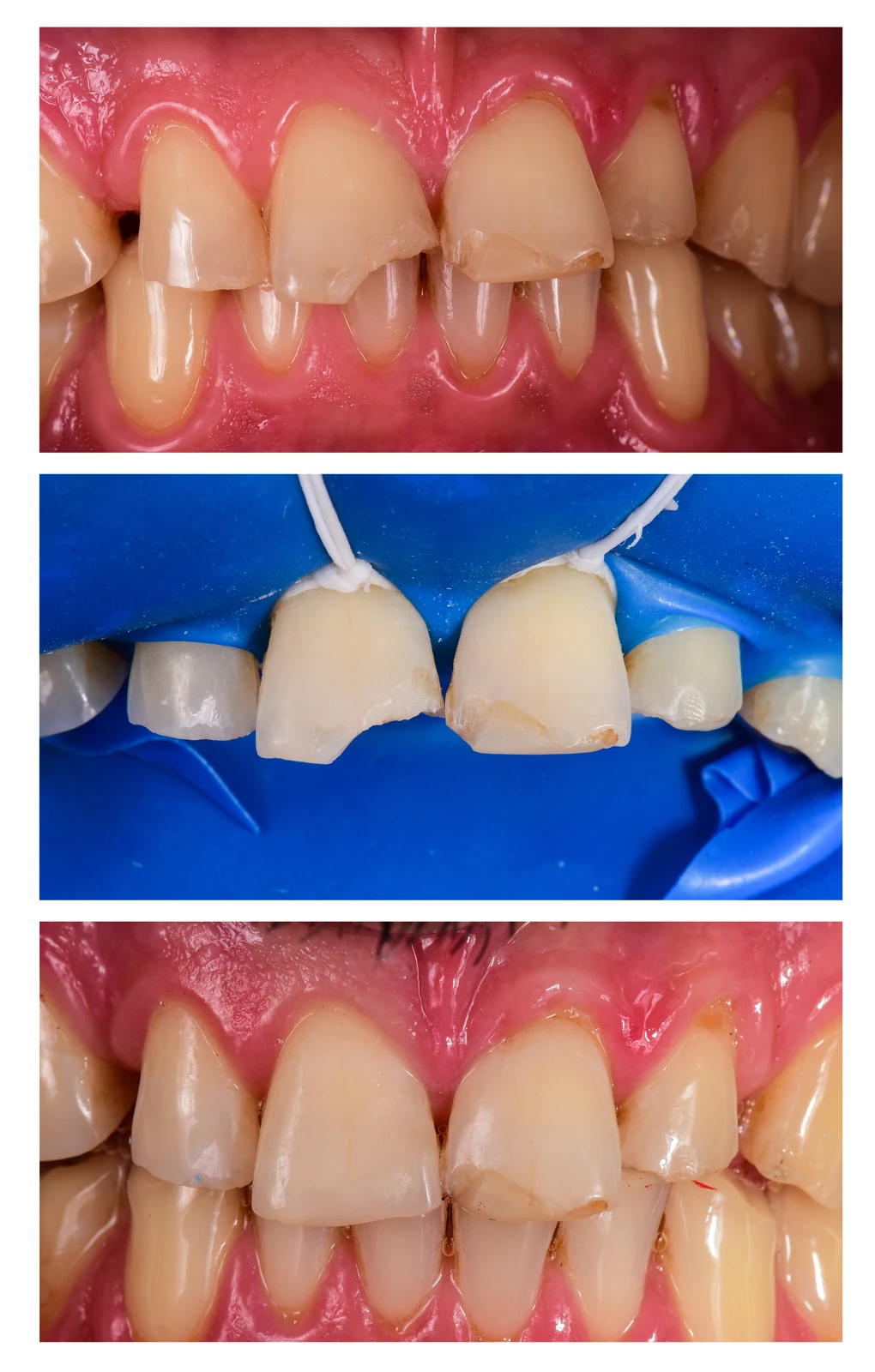
This clinical example shows tooth-colored composite added and shaped to repair chipped front-tooth edges.
Clinical example by Garo Manjikian, not an Atlas Dental patient case. The amount of bonding and the result depend on the tooth and bite.
Understanding your care
Start with the purpose of treatment, then explore what matters for your own care.
A minor chip may be repaired by adding composite where tooth structure is missing. The examination first checks whether the damage extends further than the visible edge.
Bonding can change the outline of a tooth to reduce a small visible space. Tooth proportions and the cause of the gap determine whether this is a sensible option.
Bonding can be compared with veneers, contouring or orthodontics. Each changes a different part of the problem, so the choice should start with the desired change and tooth health.
From questions to a plan
The details and sequence depend on your assessment and individual treatment plan.
Examine the tooth and bite, then clarify the specific shape or space you want to change. Discuss whether another treatment would better address it.
Select a shade and outline how much material is needed. Explain any preparation and how the planned shape relates to neighboring teeth.
Prepare the surface and add composite in the selected areas. Sculpt and harden the material, then refine the outline to suit the tooth.
Check the bite and smooth the finished surface. Review appointments can assess staining, wear or chips and whether maintenance or repair is needed.
Before you decide
Bonding works best for selected, limited changes. Composite can stain, wear or chip and may need polishing, repair or replacement. Large defects, bite forces or tooth position can make another approach more suitable. Although often conservative, the amount of preparation varies. Discuss what will be altered and avoid assuming all bonding is completely reversible.
Localized bonding adds and shapes composite directly where needed. A porcelain veneer is a custom shell covering the tooth’s front surface. Composite can also be used for a broader veneer-style restoration.
No. The size and cause of the space matter, along with tooth proportions and gum health. Orthodontic movement or another approach may be more appropriate than making the teeth wider.
The dentist assesses the damage and why it happened. Composite can sometimes be repaired, but the plan may need to address the bite or another factor contributing to repeated breakage.

A place to begin
Talk through your priorities, alternatives and who would provide your care. An assessment helps clarify the next step.
Let’s talk about your optionsOur team will contact you to confirm your visit.
The treatment images and animations in this guide illustrate examples of care. They are not Atlas Dental patient results, personal treatment recommendations or statements about an individual clinician’s scope. Your assessment and care plan determine which options are appropriate for you.